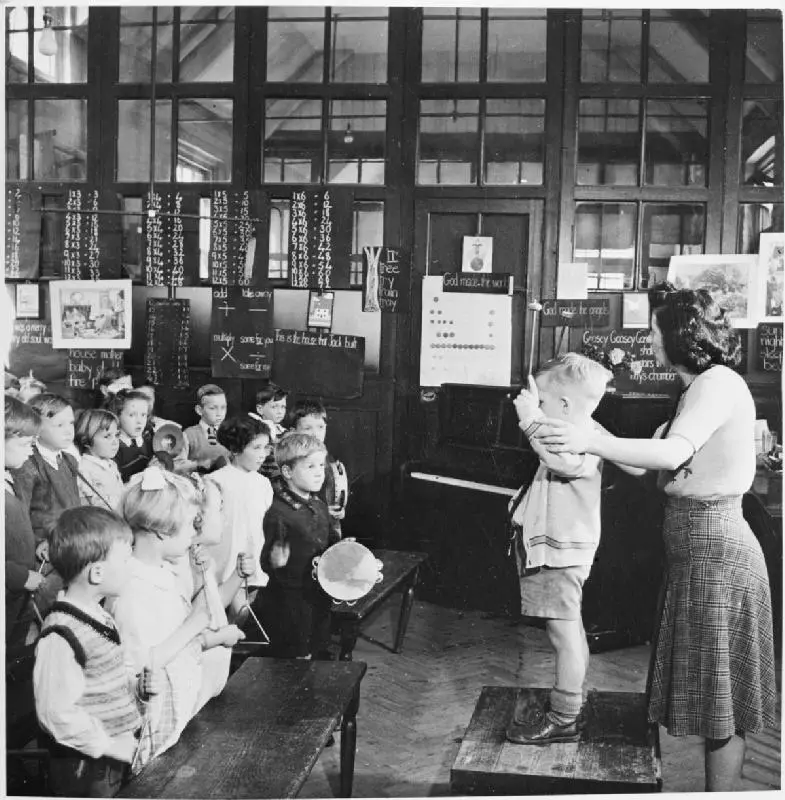
A pupil who is distracted will struggle to learn. A pupil who cannot see the point of a task may struggle to attend to it. A classroom without clear behavioural routines can make attention unnecessarily difficult.
So, here is my whistle-stop tour of the three.
Attention: what are pupils actually attending to?
Attention can be thought of as the process of focusing on one thing while filtering out everything else competing for our awareness.
In that sense, attention is a bit like a limited currency. It can be spent on the explanation at the front of the room, but it can just as easily be spent on a colourful display, the person sitting next door, what happened at breaktime, or wondering what everyone thinks of your new haircut.
This applies to the physical environment, but also to the tasks we design.
An activity can be highly engaging without producing much learning. Ask pupils to plan a party and they may become extremely enthusiastic about cakes, decorations and invitations while paying remarkably little attention to the mathematical concept the activity was supposedly designed to teach.
Engagement, therefore, is not quite the same thing as attention to learning.
Clear routines can help. If pupils know that they come in, get their books ready, write the date and begin a short task, far less attention needs to be spent working out what they are supposed to be doing.
The same is true of modelling. If what is shown on the board looks very different from what pupils are expected to complete independently, we may be creating unnecessary cognitive work.
Motivation: why should they care?
The next question is motivation.
Children arrive in the classroom motivated by all sorts of things, but those motivations are not necessarily related to learning.
They may care deeply about friendships, football, what happened at lunchtime, or whether someone noticed their new haircut. The curriculum is entering an already very busy motivational landscape.
Part of teaching, then, is helping pupils see why something is worth learning.
This may begin with extrinsic motivation: praise, certificates, rewards or simply wanting to please the teacher. None of these are necessarily bad, but ideally pupils gradually move towards something more internal.
I liked the analogy of learning an instrument. Someone might initially practise because a parent or teacher tells them to. Over time, however, they may begin to think of themselves as a musician. Learning becomes part of who they are.
Perhaps something similar happens in school.
The aim is not simply to get a child to complete a maths worksheet, but to help them gradually develop an identity as someone who can solve problems, read difficult texts, ask interesting questions and learn new things.
Belonging matters here too. Pupils are more likely to participate when they feel that they matter within the classroom and that learning is simply part of what we do here.
Behaviour: neither Trunchbull nor total passivity
Behaviour management can sometimes be imagined as a choice between being frighteningly strict or endlessly relaxed.
Neither seems especially helpful.
At one extreme sits the Mrs Trunchbull approach: shouting, negativity and constant criticism. That may create compliance in the short term, but it can also create anxiety, resentment and a classroom atmosphere in which pupils become more concerned with avoiding trouble than learning.
At the other extreme is the teacher who notices that half the class is distracted and simply starts teaching anyway.
There is a useful middle ground: warmth combined with clear expectations.
If pupils are not ready, the teacher may need to retune the room before continuing.
That might involve a familiar signal, clapping pattern, call-and-response, brief movement or simply stopping and calmly resetting expectations.
The important thing is that the strategy directs attention back towards learning rather than creating even more excitement.
Positive narration can also help:
“Thank you to the people who already have their books open.”
Or:
“I can see this table is ready to begin.”
This draws attention towards the behaviour you want without immediately filling the classroom with correction and confrontation.
There is also value in reminding pupils why routines exist:
Simple, predictable and calm.
The teacher as orchestrator
The idea I keep coming back to is the teacher as an orchestrator of attention.
We cannot completely control what pupils think about, nor should we try to. But we can shape the conditions around learning.
- We can reduce unnecessary distraction.
- We can establish routines.
- We can make explanations clearer.
- We can help pupils experience success.
- We can create belonging.
- We can maintain warm but clear behavioural expectations.
And, perhaps most importantly, we can try to make the curriculum feel like something genuinely worthy of attention.
That seems to be the thread connecting attention, motivation and behaviour: not simply getting children to look at the teacher, but gradually helping them become people who are able—and increasingly willing—to direct their attention towards learning.