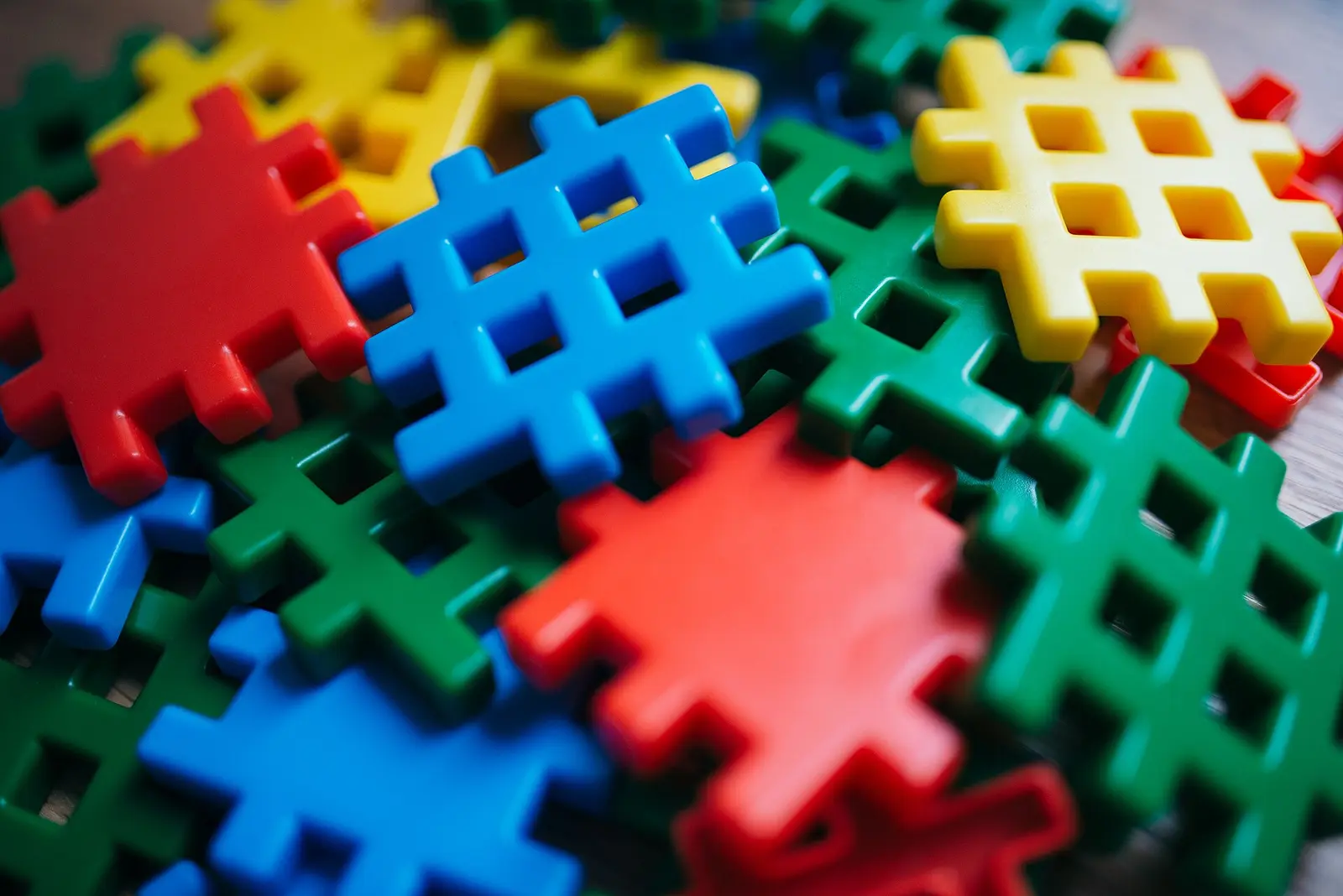
One of our lectures invited us to think seriously about the role of play in children's learning.
Take something as ordinary as playing with Lego. A child building something may be planning, predicting, testing, failing, rebuilding and changing their approach.
If other children become involved, they may also have to listen, negotiate, take turns, explain their thinking and inhibit the extraordinarily powerful urge to steal the exact brick someone else is using.
There is quite a lot going on.
Play creates room for practice
Play can give children repeated opportunities to investigate, concentrate, encounter difficulties, make connections and change strategies.
Build something.
It collapses.
Try again.
Someone suggests another way.
Change it.
Explain what happened.
It can also exercise the developing capacities we sometimes treat as if children should already possess: waiting, sharing, managing frustration, listening to somebody else and bouncing back when the first idea does not work.
These tiny moments matter. They ask children to manage themselves in relation to other people and the world around them.
Research snapshot
Where guided play showed an advantage
Selected pooled effects reported in a 2022 systematic review and meta-analysis. Positive values favour guided play.
- Early maths vs direct instruction
- g = 0.24
- Shape knowledge vs direct instruction
- g = 0.63
- Task switching vs direct instruction
- g = 0.40
- Spatial vocabulary vs free play
- g = 0.93
But play isn't magic
Saying that play can support learning does not mean that anything children happen to do while playing automatically becomes useful learning.
A child can be extremely busy, enthusiastic and engaged without necessarily thinking about the idea we hoped they would encounter.
The interesting question is not simply whether children are playing, but what the play is allowing them to notice, practise, test or understand.
The teacher as orchestrator
This makes the teacher's role rather more interesting than choosing between teaching and letting children play.
Sometimes we may need to model something before children explore it. Sometimes we scaffold the task, alter the environment, introduce a useful object or ask a carefully chosen question.
Sometimes the most helpful thing is to notice what is emerging and then stand back.
Perhaps that is what it means to deploy play thoughtfully: not treating it as a break from learning, nor squeezing every moment into a predetermined outcome, but deliberately creating conditions in which worthwhile exploration can happen.